Wednesday, 11 July 2012

Why Messi is the only candidate for the Ballon D’Or


As the nights draw in and the weather gets a touch colder it is traditional for gifts to be showered on deserving candidates, among them top footballers. It is at this time of year that an assortment of media bodies hand out their annual trinkets in recognition of the outstanding performers of the past year in football. As such it is a good time to look back on the year of 2010 and consider who is in line for these accolades and who truly merits the awards to be doled out. When considering the potential winners we must realise that there tends to be a healthy amount of revisionism in all reflections on past seasons (which only grows with time), and as such it is imperative to remember accurately just what did happen in 2010 as these may be the only memories that endure.

First it is worth noting that there has been a major change to the landscape of footballing awards with the amalgamation of two of the most noted prizes. The Ballon D’Or, the oldest of the major footballing awards and inaugurated in 1956, has merged with the FIFA World Player of the Year award to form the imaginatively named FIFA Ballon D’Or. The significance of the merger in terms of the likely winner is as yet unclear. Since the FIFA award was created in 1991, they have chosen different winners on seven occasions with only one of those (1994) being due to differing eligibility. The last five years have seen the two awards choose the same victor.

The variances noted between the winners reflect the differing voters who previously determined the year’s premier player. While the Ballon D’Or was chosen by journalists, indeed the award is organised by France Football magazine, FIFA’s gong was initially selected by national team managers and later by managers and captains. FIFA have smoothed out some of the issues that plagued their award (such as Marco van Basten and Carlos Alberto receiving votes some years after retiring), but it remains imperfect and tends to suggest that many of those voting have watched very little of the players eligible. While FIFA’s move to prevent voters selecting their compatriots was a sensible one, it has still not ironed out the issue at a club level. John Terry chose Didier Drogba and Michael Ballack as the top two in the world in 2009 while Yossi Benayoun (then of Liverpool) found room for Steven Gerrard and Fernando Torres.

The final major award is that decided by English magazine World Soccer. Created in 1982, it is voted on by readers in an open poll. Since the birth of the World Player of the Year award, there have only been two instances (1994 and 1995) in which the World Soccer prize did not follow that  of either FIFA or France Football.

Given that this is a World Cup year, the importance of that great event will inevitably have a significant bearing on the destination of the famous trophies. Since the Ballon D’Or was created in 1956, World Cup years have almost universally since the award go to a star performer from the tournament. In the intervening years only twice has the recipient not come from a team reaching the semi-finals of the competition. Kevin Keegan won the award in 1978, when England didn’t even qualify, but that reflected the fact that non-Europeans were ineligible until 1995 and so Kempes, Passarella et al were barred from the voting. Equally Maradona was a sure fire winner in 1986 (he romped home in the World Soccer poll), but his exclusion let in Igor Belanov, a star at the World Cup for the Soviet Union as well as a winner of the Cup Winners’ Cup that year. World Soccer in comparison has only seen one winner from a non World Cup winning team, and then it was Paolo Maldini, a losing finalist as well as a Champions League winner in 1994, who scooped the title.

This World Cup focus is increasingly outdated in the modern era. In the earliest days of the awards this level of focus was understandable. For starters there simply wasn’t the availability of footage, even to journalists, that exists today. A journalist in England might only see a Kopa or a Masopust once in an entire season at club level, if that, and so it was natural in a World Cup year to focus on the players who did perform well wehen you got the chance to see them. That simply isn’t the case anymore. Nor does it remain true that the World Cup represents a level above that of top club football. The Champions League knock-out rounds now offer a standard the equal of anything the World Cup can muster. As such, to place seven games out of 60 or so in a season on a pedestal is just not representative of the current status quo in world football. Although we may dislike this overemphasis, we must though remember that this remains a factor in the minds of voters.
   
Inevitably then the betting currently seems to reflect the heavy bias that exists towards World Cup performances. Paddy Power currently have Wesley Sneijder as the 6/5 favourite with the Spanish cohort of Iniesta, Xavi and Villa close behind. World Cup Golden Ball winner Diego Forlan and Holland’s outstanding winger Arjen Robben are also deemed to be in contention by the bookmakers. The only other man deemed in with a shout (at under 20/1) is the reigning champion Lionel Messi, and in my opinion he is the only candidate for the trophy this year.

Before we start we should note that along with the focus on the World Cup, the time periods considered by voters tend to be idiosyncratic. Although the award is nominally for the calendar year voters tend to look at the entire previous season (so in this case the whole of 2009-10) as well as any outstanding performers in the start of this year. This makes the period under consideration effectively 15 months, with the first three of a season being counted in two periods. As such when considering the statistical performance of players I will look at their record in the whole of 2009/10 and also the opening months of the new season.

To look first then at the current favourite, Inter’s playmaker, Wesley Sneijder. Sneijder’s candidacy is obvious, not only did he finish as joint top goalscorer with five at the World Cup he also proved instrumental in Inter’s Champions League triumph. The Sneijder bandwagon started with Inter’s victory over Chelsea in the second round of their European Campaign. It was Sneijder’s through ball to Samuel Eto’o which led to Inter killing off the game, but while his influence was to the fore in both legs it was surely Lucio and Walter Samuel’s shackling of Didier Drogba which proved crucial in the victory (as well as  referee Manuel Mejuto Gonzalez’s liberal attitude towards contact in the penalty area). In the quarter-final Sneijder again proved his worth against CSKA Moscow with a low free kick which secured a 2-0 aggregate victory, but once more the defence was vital in shutting out their Russian opponents.

Perhaps Sneijder’s most significant club performance of the season came in the semi-final against Barcelona. Certainly he took his goal well, but it was put on a plate for him by the industrious Diego Milito, as was Maicon’s goal in the second half. His “assist” for Milito’s crucial third goal, was in reality a misguided header which only the predatory instincts of Milito turned into a great chance. In the second leg Inter displayed the efficacy of teamwork and the difficulty that any top team (even Barcelona) face in breaking down a well-drilled defence happy to play with limited ambition. In the final his inch-perfect pass allowed Milito to put Inter into the lead, however when Milito returned the favour minute later Sneijder could only fire a tame shot at Hans-Jorg Butt. Finally it was Milito who applied the coup de grace with his neat footwork and fine finish to put the result beyond doubt.

Undeniably Sneijder played a huge role in Inter’s Champions League success, but he was only one part of a well oiled machine. Inter were fortunate to have a whole team that worked in sync to defeat. Julio Cesar produced some tremendous saves during the run, Samuel and Lucio were at their uncompromising best, Maicon and Zanetti could rampage down the flanks, Cambiasso and Motta provided an excellent shield for the defence, Eto’o and Pandev worked tirelessly for the cause and Diego Milito was there to finish things off. To pick out a single player (and to ignore the influence of Jose Mourinho in setting the team up) would be to ignore the collectivism that was the true cause of Inter’s success.

Of course, the game cannot be judged in numbers alone (if it was we could simply count the goals and assists of each player and come up with Ballon D’Or winner easily), but it is worth looking at the statistics to judge the influence of Sneijder on Inter across the season in club football. Sneijder made 26 appearances for Inter in Serie A last term, scoring four goals and providing six assists. In the Champions League he made 11 appearances, scoring three and making six goals. In comparison Milito played 35 times en route to Inter’s Scudetto triumph, netting 22 times and providing four assists. In Europe he also appeared 11 times, and scored six goals with two assists.

Holland’s excellent performances at the World Cup were the other cause of Sneijder’s prominence in the list of likely contenders for the Ballon D’Or. With five goals in the tournament Sneijder ended as joint top scorer, and as such guaranteed that he would be in the reckoning. In considering performances at the World Cup, I think it is important to look at the actions in significant detail. Due to the (in my view) over importance attached to a seven game run in the context of a 60 game season, we have to look at these performances closely because the normal argument that blips even themselves out over the course of a season simply doesn’t apply to such a small population.

Sneijder’s tournament scoring started against Japan when Robin Van Persie’s miscontrol saw the ball break free to Sneijder on the edge of the box. While his crisp strike was certainly hit with venom, it was a soft goal for the Japanese to give away. Kawashima actually dived past the ball as he let it in and in normal circumstances it should have been a routine save. Against Slovakia Sneijder did play well, with a fine pass to release Robben and a clean finish of his own to wrap the game up. It was in the quarter-final against Brazil though that Sneijder really boosted his claims to recognition. Holland went into the game as underdogs, despite their perfect record in the tournament so far (not to mention an excellent qualification campaign), but managed to come back from a goal down to shock the Brazilian and progress to the semi-finals. Sneijder’s two goals in the game marked him out as Holland’s star man, but in reality each was the result of major errors in the Brazilian defence. His first was a hopeful cross into the box which Felipe Melo and Juilo Cesar conspired to allow in the net, the second an instinctive header which the Brazilians allowed to an unmarked man of 5’7 inside the six yard box. Certainly Sneijder was clever to take it, but the Brazilians were the architects of their own downfall in the game with Felipe Melo especially culpable.

In the game against Uruguay Sneijder was especially fortunate to find his name on the score sheet. His shot appeared to be going wide, before taking a deflection off Walter Gargano and then going under the legs of Van Persie who had been stood in a marginally offside position. The final saw Holland’s run come to an abrupt end, but Sneijder did come close to playing a crucial role when his pass allowed Arjen Robben to run in on goal only to fluff his lines at the crucial moment. That miss might just have cost Holland the cup. So, of Sneijder’s five goals scored in the tournament, two took crucial deflections, one was a major goalkeeping error and two were well taken. It knocks some of the lustre of his joint top goalscorer accolade.

In summary, Sneijder has had a superb year in 2010, however it is just not as good as is often being made out. He was one of many crucial players for Inter in their run to a magnificent treble, and in fairness to him his influence is perhaps not adequately reflected in his statistics (especially in Serie A). However, on national duty he is flattered by his goal tally and his performances in no way merited his receipt of the Bronze Ball in the tournament.

Next, to the Spanish trio of Xavi, Iniesta and Villa. With Spain’s victory in the World Cup the likelihood that one Spaniard would lift the Ballon D’Or raised significantly. As the scorer of the only goal in the final Andres Iniesta was catapulted to the top of the list (at least with the bookmakers) for the year end awards. He is though surely not a serious candidate. In the last two years the cult of Iniesta has taken hold among many observers, but the Ballon D’Or is a leap far too far.

For all his artistry, and Iniesta does possess a sublime first touch and dazzling footwork, he just does not deliver enough. Last season he only managed to start 20 games in the league (making nine substitute appearances) and mustered a single goal to add to his five assists. For a midfielder of his supposed level that is a criminally poor level of output. In the Champions League he featured on nine occasions and did not supply a goal or an assist. Unquestionably this fails to take account of the way that Iniesta links play in midfield, of his dribbling ability that shifts defences around or of the number of passes he makes which lead indirectly to goals. But none of that makes up for his lack of personal contribution. While he took his goals well in the group game against Chile and in the final against Holland, his overall performances were not earth shattering. He certainly played his part in the relentless passing machine that is the Spanish midfield, but so did Sergio Busquets and nobody has put him forward as a candidate. His neat footwork helped to undo both the Paraguayan and Portuguese defences at crucial moments, but his club form was not on the level needed of the supposed best player in the world. In short, if Iniesta did triumph in the Ballon D’Or it would be the least deserved recipient in history.

Many struggle to separate Iniesta from his partner in crime Xavi. Certainly the diminutive pair share similarities, composure on the ball and the precision of their passing foremost among them, but their contributions in the last year have been markedly different. While Xavi, like Iniesta, suffers from the fact that numbers cannot do justice to his overall impact his was a far more tangible contribution last season.
Xavi’s greatest strength remains his ability to retain possession and by doing so to push and pull defences until an opening (however small) might present itself. For a player to make more than 100 passes in a game is an astonishing milestone, for Xavi that is a common occurrence. At the World Cup Xavi led the way yet again with his passing. He completed more passes than any other player and averaged over 95 passes attempted a game. It was this control of possession that acted as Spain’s greatest defensive asset. Even teams (like Germany) whose gameplan was based on the counter-attack struggled against Spain because they just couldn’t get the ball, and by the time they did they were too tired to do anything with it.

So to try and judge Xavi purely on his output is not enough, but there are a couple of notable figures which may help our analysis. Xavi led La Liga last season in assists with 14, and also made three goals in the Champions League. In the World Cup though he was only directly responsible for a single goal, his pass to David Villa against Portugal was a sublime flick of his boot, but it did not represent an adequate return on the levels of possession that Xavi enjoyed. Admittedly, almost all defences held a very deep line against Spain, content to let them pass the ball interminably with a lack of penetration, but Spain surely would have expected more goalscoring chances to have been created.  

David Villa’s contribution to Spain’s success in South Africa was obvious. The team only scored eight goals in their seven games, and Villa netted five of them. Their reliance on his predatory instincts was tremendous, and indeed in the early stages their tactic appeared to be to pass the ball until Villa got a chance and then expect to keep a clean sheet. His first goal against Honduras in particular, a slaloming run followed by a sliding finish into the top corner, will live long as one of the highlights of an uninspiring tournament. There was a tremendous economy of his goals, only his second against Honduras was not responsible for a victory. If there was a fault to be found in his play at the World Cup it was the drop off in his productivity past the quarter-finals. The much maligned Fernando Torres (who was extremely poor in fairness) did his best work as a central foil, allowing Villa to cut in from the left. Once Torres was withdrawn and Villa was asked to occupy a central role, he found goals far harder to come by.

In club football Villa’s performances need to be put in context. Compared to his previous season where he hit 28 in the league, or his first season at Valencia where he scored 25, a return of 21 league goals was a disappointment. However, given the financial difficulties facing Valencia and the importance that those goals played in lifting Los Che into third place (admittedly miles behind both Barca and Real Madrid) not a great deal more might have been expected. In light of the fact that Messi scored 34 league goals can a pure finisher like Villa really expect the Ballon D’Or with just 21? His claim is far stronger than that of Iniesta, but there is a more deserving candidate than David Villa.

As the winner of the Golden Ball at the World Cup, Diego Forlan must have a strong claim. Forlan’s performances in South Africa (along with Luis Suarez’s goalkeeping abilities) played a huge part in Uruguay’s dramatic progress to the semi-final. With a brace against South Africa, as well as goals in the quarter-final, semi-final and third place play-off Forlan finished the competition as joint top scorer. Furthermore the range of Forlan’s goals placed him among the star performers in the competition. However, as with Sneijder we need to look behind the raw numbers at the goals themselves. Forlan got off the mark with an audacious strike from 30 yards out, but the ball took a wicked deflection off Mokoena leaving Khune in the South African net flat footed. His second in the game was a penalty. Against both Ghana and Holland, the venom in Forlan’s long range blasts was considerable but in both cases the ball was largely straight down the middle of the goal and it was only late swerve that deceived the keepers. Both were great strikes, but there would have been few on the receiving end who would not have hoped for more from their goalkeepers. Forlan’s goal against Germany, named the goal of the tournament, was beyond reproach as he steered his volley powerfully into the net. Forlan’s tournament was a fine one, but he has his elements of luck along the way.

For Atletico Madrid Forlan’s form was mixed. In light of his incredible 32 goals in La Liga the previous season, a return of just 18 was a let down. The decline in output of Forlan (along with the fifth leakiest defence in the league) saw Atletico finish a lowly ninth, a staggering 52 points behind champions Barca (Atleti finished with just 47 points themselves). Where Forlan did come alive last season was in the Europa League, particularly the latter stages. The Uruguayan hit a goal against.Valencia in the quarter-final, and the followed it with an injury time winner against Liverpool in the semi, and a pair in the final against Fulham. Certainly impressive stuff, but putting the calibre of opposition to one side (neither Fulham nor Liverpool could even manage a top six finish in England last year) we must realise that the Europa League remains a second-tier competition. Forlan’s goals were vital to Atletico’s success, but their presence in the competition only came about by their failure in the Champions League. Is that really the basis for a Ballon D’Or winner?

Arjen Robben is another who, like Diego Forlan, performed well on multiple stages. With his club, Bayern Munich, Robben completed the domestic double and was crucial in their road to victory. Featuring in 24 league games, Robben scored a startling 16 goals and provided seven assists, a fine return for a right winger. In the Champions League Robben’s performances were equally crucial. His astonishing goal against Fiorentina in the second-leg of their tie, a mazy dribble before unleashing a thunderous drive, not only sealed the victory it must also rank among the goals of the year. Equally his volleyed winner against Manchester United in the quarter-finals was a stunning display of the quality of his technique. To show these efforts were no flukes, Robben repeated the trick with another wonder strike against Lyon at the semi-final stage, giving the diving Hugo Lloris no chance.

At the World Cup Robben missed the early stages through injury, but his return in place of the impressive Eljero Elia made Holland even stronger. Robben’s goal against Slovakia in the first round was virtually a carbon copy of his strike against Lyon, cutting inside defenders from the right and driving a low effort into the bottom corner. In the semi-final against Uruguay Robben showed his versatility with a rare header to help the Oranje into the final. However, in the most important game of all the flying Dutchman squandered a golden opportunity when one on one with Casillas to put Holland into a crucial lead. To discount Robben for the major awards on the basis of that miss alone would be churlish, but his absence in that game as well as a low key Champions League final weaken his case for victory. The most notable problem for Robben is that he was only able to start 18 games in the league last season, while he was restricted in the World Cup to four. When he did play he was excellent, but so too were a number of players who got to play a lot more games and so showed more than the periodic bursts of brilliance that the Dutchman displayed.

In analysing this I have excluded the likes of Cristiano Ronaldo and Didier Drogba, both of whom enjoyed stellar club season but who look set to be passed over for recognition in favour of the World Cup stars. Equally many defensive players such as Puyol and Maicon, who performed well both for their clubs and their country, will miss out due to the longstanding preference for midfielders and attackers. Diego Milito, Wayne Rooney, Carlos Tevez, Frank Lampard, Lucio and Gerard Pique all failed to even be nominated.  On the balance of the entire year all these players are more worthy candidates than Iniesta, but the bias is sure to prevail.

So that just leaves Lionel Messi. If this had been a non World Cup year Messi would have been a sure fire winner. To start by getting the statistics out of the way, he scored 34 goals in 35 games in the league and eight in 11 in the Champions League. The only player to provide more assists in the league was Xavi, and sadly for Messi he doesn’t have a Messi of his own to pass to. Those numbers are staggering. The last player to hit 34 goals in the league in Spain was Ronaldo in 1996-7, his first season at Barcelona, and widely considered to have been one of the greatest individual seasons of all time. Yet Messi isn’t even a striker.
    
Messi’s consistent brilliance last season ranks up there with the best in the history of the game, he was that good. Particular moments stand out as special memories. Successive league hat-tricks against Real Zaragoza and Valencia (with a brace against Stuttgart sandwiched in between) will live long in the minds of those who witnessed them. Arguably his finest hour though was a single-handed demolition of Arsenal at the Camp Nou in which Messi netted four times. Decisively that game was immediately followed by a victory in the Bernabeu against Real Madrid that in effect won the title for Barca, and which saw Messi yet again on the scoresheet.

Of course the doubters will point out Barca’s failure to break down Inter and eventual elimination from the Champions League as proof that the boy is not infallible. That is true of course, but no player is. Even the greatest players had their failures. Had Bojan been able to convert the header that Messi supplied on a plate in the second-leg, had Julio Cesar not made a finger-tip save from Messi’s curling shot, had a number of things have gone Barca’s way they might well have found themselves as champions yet again. Certainly Messi has difficulties in breaking down defences who are willing to sit with a flat back six and three screening players in front (as Inter did at the Camp Nou), but that simply displays the difficulties faced by any great attack in facing an equally great defence.

In addition there will be those who point out Messi’s failure to score at the World Cup. That though fails to take into account the position that Maradona asked Messi to take up, as a central playmaker. It also ignores the superhuman efforts of Nigerian keeper Vincent Enyeama who kept Messi at bay with a string of supreme saves. It certainly doesn’t recognise his overall contribution to the team or the fact Messi as well was named to the team of the tournament for his fine displays.

The season that Messi has just enjoyed is the sort that comes along very rarely, even for the very greatest players and as such we should treasure it. Surely Messi’s performances trump those of all his rivals, for the tremendous consistency he has reached as well as the singular brilliance of his efforts. Messi may have been the top scorer in both league and European play last season, but it was the genius of his play that most delighted spectators. Regardless of whether he found the net or not, fans could be sure that Messi would illuminate the game with a moment of magic, whether it be a pass, a trick or of course is incomparable dribbling ability. It is this combination aesthetic pleasure with brutal efficiency that marks out Messi as head and shoulders above his rivals, and as such he is the only genuine candidate for the accolade of the world’s best player. 

This piece first appeared on BigSoccer in 2010.

A History of World Football in 100 Games - Part 26


 Millonarios 3-2 Deportivo Cali (4 December 1949) Estadio El Campin, Bogota

It seems hard at times to imagine that Colombia once had a claim to the world’s greatest football league. For at a time when the country’s international image is largely confined to the drug trade and, at a push, the FARC guerrillas, it seems strange that such a situation could ever have existed. That it did was due to an equally unusual set of circumstances.

The creation in 1948 of a new, professional league would not ordinarily have led to immediate ascension to the forefront of the world game. Colombia’s Dimayor (Division Mayor del Futbol Colombiano) in fact faced early and potentially fatal difficulties. Chief of these was the opposition of the existing amateur league, Adefutbol, to the presumption of the clubs that they were entitled to create such a league. That opposition manifested itself in the amateur league’s successful petitioning of FIFA to refuse to sanction the newcomer.

This meant in effect that the league was isolated from international connections, and while that would have been expected to prove a hindrance it was actually its greatest advantage. Unconstrained by the rules and regulations which governed leagues affiliated with FIFA, the Colombian league was able to acquire players without paying a transfer fee. In an era in which clubs still treated players like chattels, not only did this vastly widen the pool of players to recruit from, it also allowed Colombian clubs to pay these superstars handsomely.

The first to arrive in Bogota was the Argentine legend Adolfo Pedernera. With the Argentine league at the time gripped by an ongoing player’s strike he sensed the opportunity to cash in with Millonarios. Pedernera’s role though was not just as a player. His reputation unlocked doors throughout Argentina and he was shrewdly perceived as a man who could bring still more great players to Colombia.

Before long all the clubs were following Millonarios’ lead in chasing foreign talent. Deportivo Cali, like Millonarios, concentrated their pursuit in Argentina, while others cast a wider net over the rest of South America. The most unusual recruiting policy was that of Santa Fe. They pulled off the audacious capture of Neil Franklin, arguably England’s greatest ever central defender, along with his Stoke teammate George Mountford and Charlie Mitten of Manchester United.

Neil Franklin

Somewhat predictably, given the now well deserved reputation of English players abroad, the Anglo invasion did not turn out as might have been hoped. Homesickness quickly accounted for Franklin and only Mitten really made a lasting impression, though that didn’t deter Millonarios from recruiting more British players. On his return to England Franklin found himself banned from the Football League, but even after that was lifted he appeared to have been blacklisted by the top clubs. 

While the English may have struggled, many of South America’s finest talents prospered. Pedernera’s contacts in Argentina allowed Millonarios to acquire a raft of young stars, most notably Pedernera’s successor at River Plate, Alfredo Di Stefano. Though not yet the legend he would later become, Di Stefano had already won six caps for Argentina, scoring six goals and winning the 1947 Copa America at the age of 21. His prodigious goalscoring feats for both River Plate and Huracan pointed to a perfect recruit for Millonarios.

Such was the calibre of the players that were attracted to Colombia in the era that it came to be known as “El Dorado” in recognition of the monetary rewards on offer. Pedernera arrived on a salary of $5,000 a year and money was certainly the only motivating factor behind Franklin and Mountford’s brief South American sojourn. Yet while the players may have arrived for purely financial reasons the fans and club owners could well reflect on what was a golden age in Colombian football.

In Bogota neither Di Stefano nor Pedernera disappointed. Millonarios came to dominate the league in those El Dorado years, with a brand of football that imitated that of River Plate’s La Maquina team. No wonder then that they were named El Ballet Azul (The Blue Ballet) for the grace and poise with which they played the game.

Di Stefano’s first season in Colombia was undoubtedly the campaign which saw the tightest race for the title. With the “Blond Arrow” joined in the team by his compatriots Nestor Rossi, a superb defensive midfielder, and the prolific Pedro Cabillon, Millonarios looked set to cruise past the opposition. Instead they were pushed all the way by Deportivo Cali, with the championship finishing level after 26 games. That forced a play-off for the title which saw Millonarios win the first leg in Cali, and clinch the championship at home in a pulsating 3-2 finale.

El Ballet Azul

Yet almost as soon as Colombia’s golden age had begun it was over. In 1950, besieged by deputations from FIFA and their South American neighbours, the Dimayor agreed that they would, in four years time, return to the international fold. That meant allowing foreign players to return to their original clubs and, in turn, to pay transfer fees for the acquisition of future players. While it provided a temporary stay of execution, the agreement effectively removed Colombia’s competitive advantage when it came to recruiting players. With parity restored Colombian clubs were no longer in a position to pay their players a king’s ransom, and the players now had little incentive to stay.


Colombia’s time in the sun may have been fleeting, but they had much to be thankful for. In a tumultuous five years they had played host to a cast of the game’s greatest players and seen a quality of football the nation could not hope to witness before or since. The players soon departed (Di Stefano was already gone by the time 1954 rolled round), but they had left a lasting memory in the minds of Colombian football fans. El Dorado was truly a golden era. 

Friday, 25 May 2012

European "Rangliste" 2011/12

Following my mid-season attempt to rate the best performing players in Europe of 2011/12 (in the style of kicker's legendary "Rangliste") I was hoping to update it after the campaign's climax with more brief profiles of the game's leading stars. Sadly time didn't permit that endeavour, but instead I have included below a short summary of the rankings I would have provided along with the league appearances and goals for roughly 120 top performers. As always it makes no claim to be definitive, but does aim to be a fair reflection of those who shone in 2011/12.

Goalkeepers

Gianluigi Buffon (Juventus and Italy) 34 games, 0 goals **
Marc-Andre ter Stegen (Borussia Moenchengladbach and Germany) 34 games, 0 goals **
Samir Handanovic (Udinese and Slovenia) 38 games, 0 goals **
Salvatore Sirigu (Paris Saint-Germain and Italy) 38 games, 0 goals **
Manuel Neuer (Bayern Munich and Germany) 33 games, 0 goals *
Michel Vorm (Swansea and Holland) 37 games, 0 goals *
Rui Patricio (Sporting Lisbon and Portugal) 28 games, 0 goals *
Joe Hart (Manchester City and England) 38 games, 0 goals *
Bernd Leno (Bayer Leverkusen and Germany) 33 games, 0 goals *
Tim Krul (Newcastle United and Holland) 38 games, 0 goals *
Iker Casillas (Real Madrid and Spain) 37 games, 0 goals *
Petr Cech (Chelsea and Czech Republic) 34 games, 0 goals *
Steeve Elana (Brest and France) 37 games, 0 goals *
Thibaut Courtois (Atletico Madrid and Belgium) 37 games, 0 goals *


Full-backs

Dani Alves (Barcelona and Brazil) 33 games, 2 goals **
Philipp Lahm (Bayern Munich and Germany) 31 games, 0 goals **
Lukasz Piszczek (Borrusia Dortmund and Poland) 34 games, 4 goals **
Marcelo (Real Madrid and Brazil) 32 games, 3 goals *
Kyle Walker (Tottenham Hotspur and England) 37 games, 2 goals *
Stephan Lichtsteiner (Juventus and Switzerland) 35 games, 2 goals*
Mathieu Debuchy (Lille and France) 32 games, 5 goals*
Christian Maggio (Napoli and Italy) 33 games, 3 goals *
Tony Jantschke (Borussia Moenchengladbach and Germany) 32 games, 1 goal *
Henri Bedimo (Montpellier and Cameroon) 36 games, 1 goal *
Pablo Armero (Udinese and Colombia) 28 games, 0 goals *
Jordi Alba (Valencia and Spain) 32 games, 2 goals *


Centre-backs

Thiago Silva (AC Milan and Brazil) 27 games, 2 goals ***
Mats Hummels (Borussia Dortmund and Germany) 33 games, 1 goal ***
Vincent Kompany (Manchester City and Belgium) 31 games, 3 goals ***
Giorgio Chiellini (Juventus and Italy) 34 games, 2 goals **
Javier Mascherano (Barcelona and Argentina) 30 games, 1 goal**
Andrea Barzagli (Juventus and Italy) 35 games, 1 goal **
Sergio Ramos (Real Madrid and Spain) 34 games, 3 goals **
Jonny Evans (Manchester United and Northern Ireland) 29 games, 1 goal *
Jan Vertonghen (Ajax and Belgium) 31 games, 8 goals*
Holger Badstuber (Bayern Munich and Germany) 33 games, 0 goals *
Adil Rami (Valencia and France) 33 games, 2 goals *
Mapou Yanga-M’Biwa (Montpellier and France) 34 games, 1 goal *
Nicolas N’Koulou (Marseille and Cameroon) 30 games, 0 goals *
Hugo Campagnaro (Napoli and Argentina) 31 games, 2 goals*
Dante (Borussia Moenchengladbach and Brazil) 33 games, 0 goals *
Javi Martinez (Atletic Bilbao and Spain) 31 games, 4 goals *
Lucio (Internazionale and Brazil) 34 games, 1 goal *


Defensive Midfielders
Arturo Vidal (Juventus and Chile) 33 games, 7 goals **
Scott Parker (Tottenham Hotspur and England) 29 games, 0 goals **
Sergio Busquets (Barcelona and Spain) 31 games, 1 goal **
Daniele De Rossi (Roma and Italy) 32 games, 4 goals *
Jeremy Toulalan (Malaga and France) 25 games, 3 goals *
Francesco Lodi (Catania and Italy) 37 games, 9 goals *
Alex Song (Arsenal and Cameroon) 34 games, 1 goal *
Lars Bender (Bayer Leverkusen and Germany) 28 games, 4 goals *
Felipe Melo (Galatasaray and Brazil) 36 games, 12 goals *
Axel Witsel (Benfica and Belgium) 29 games, 1 goal *
Etienne Capoue (Toulouse and France) 33 games, 3 goals *


Central Midfielders
Andrea Pirlo (Juventus and Italy) 37 games, 3 goals ***
Xavi (Barcelona and Spain) 31 games, 10 goals ***
Bastian Schweinsteiger (Bayern Munich and Germany) 22 games, 3 goals **
Luka Modric (Tottenham Hotspur and Croatia) 36 games, 4 goals **
Yaya Toure (Manchester City and Ivory Coast) 32 games, 6 goals **
Xabi Alonso (Real Madrid and Spain) 36 games, 1 goal **
Claudio Marchisio (Juventus and Italy) 36 games, 9 goals *
Michael Carrick (Manchester United and England) 30 games, 2 goals *
Rasmus Elm (AZ Alkmaar and Sweden) 32 games, 2 goals *
Rio Mavuba (Lille and France) 38 games, 1 goal *
Jordy Clasie (Feyenoord and Holland) 33 games, 3 goals *
Yohan Cabaye (Newcastle United and France) 34 games, 4 goals *
Roman Shirokov (Zenit St Petersberg and Russia) 23 games, 7 goals *
Ramires (Chelsea and Brazil) 30 games, 5 goals *


Attacking Midfielders

David Silva (Manchester City and Spain) 36 games, 6 goals ***
Shinji Kagawa (Borussia Dortmund and Japan) 31 games, 13 goals **
Mesut Oezil (Real Madrid and Germany) 35 games, 4 goals **
Sebastian Giovinco (Parma and Italy) 36 games, 15 goals **
Younes Belhanda (Montpellier and Morocco) 28 games, 12 goals *
Juan Mata (Chelsea and Spain) 34 games, 6 goals *
Cesc Fabregas (Barcelona and Spain) 28 games, 9 goals *
Frank Lampard (Chelsea and England) 30 games, 11 goals *
Toni Kroos (Bayern Munich and Germany) 31 games, 4 goals *
Christian Eriksen (Ajax and Denmark) 33 games, 7 goals*
Hugo Viana (Braga and Portugal) 26 games, 2 goals *
Andres Iniesta (Barcelona and Spain) 27 games, 2 goals *
Mikel Arteta (Arsenal and Spain) 29 games, 6 goals *
Pablo Aimar (Benfica and Argentina) 24 games, 2 goals *


Wingers

Franck Ribery (Bayern Munich and France) 32 games, 12 goals ***
Eden Hazard (Lille and Belgium) 38 games, 20 goals ***
Nene (Paris-Saint Germain and Brazil) 35 games, 21 goals **
Gareth Bale (Tottenham Hotspur and Wales) 36 games, 9 goals **
Dries Mertens (PSV Eindhoven and Belgium) 33 games, 21 goals *
Santi Cazorla (Malaga and Spain) 38 games, 9 goals *
Antonio Valencia (Manchester United and Ecuador) 27 games, 4 goals *
Juan Arango (Borussia Moenchengladbach and Venezuela) 34 games, 6 goals *
Mathieu Valbuena (Marseille and France) 33 games, 5 goals *
Arjen Robben (Bayern Munich and Holland) 24 games, 12 goals *
Nani (Manchester United and Portugal) goals 29 games, 8 goals *
Angel Di Maria (Real Madrid and Argentina) 23 games, 5 goals **

Forwards

Lionel Messi (Barcelona and Argentina) 37 games, 50 goals ***
Cristiano Ronaldo (Real Madrid and Portugal) 38 games, 46 goals ***
Wayne Rooney (Manchester United and England) 34 games, 27 goals ***
Marco Reus (Borussia Moenchengladbach and Germany) 32 games, 18 goals ***
Hulk (Porto and Brazil) 26 games, 16 goals **
Clint Dempsey (Fulham and USA) 37 games, 17 goals **
Fabrizio Miccoli (Palermo and Italy) 28 games, 16 goals *
Stevan Jovetic (Fiorentina and Montenegro) 27 games, 14 goals *
Jeremy Menez (Paris Saint-Germain and France) 33 games, 7 goals *
Matias Suarez (Anderlecht and Argentina) 30 games, 12 goals *
Alexander Kerzhakov (Zenit St Petersburg and Russia) 29 games, 19 goals *


Strikers

Robin Van Persie (Arsenal and Holland) 38 games, 30 goals ***
Zlatan Ibrahimovic (AC Milan and Sweden) 32 games, 28 goals ***
Klaas Jan-Huntelaar (Schalke and Holland) 32 games, 29 goals ***
Radamel Falcao (Atletico Madrid and Colombia) 34 games, 24 goals ***
Mario Gomez (Bayern Munich and Germany) 33 games, 26 goals ***
Edinson Cavani (Napoli and Uruguay) 25 games, 23 goals **
Antonio Di Natale (Udinese and Italy) 36 games, 23 goals **
Robert Lewandowski (Borussia Dortmund and Poland) 34 games, 22 goals **
Sergio Aguero (Manchester City and Argentina) 34 games, 23 goals **
Olivier Giroud (Montpellier and France) 36 games, 21 goals *
Claudio Pizarro (Werder Bremen and Peru) 29 games, 18 goals *
Seydou Doumbia (CSKA Moscow and Ivory Coast) 36 games, 26 goals *
Papiss Cisse (Freiburg/Newcastle and Senegal) 31 games, 22 goals *
Alexander Frei (Basel and Switzerland) 29 games, 23 goals *
Karim Benzema (Real Madrid and France) 34 games, 21 goals *
Bas Dost (Heerenveen and Holland) 34 games, 32 goals *
Gonzalo Higuain (Real Madrid and Argentina) 35 games, 22 goals *
Diego Milito (Inter and Argentina 33 games, 24 goals *
Ratings

World Class *** – Performing consistently to an exceptional standard. Among the finest players in the world and performing at a level comparable with the very best in your position. (Guideline – 15-20 players a season)
International Class ** – Performing consistently to an excellent or sporadically to an exceptional standard. (Guideline – 20-30 players a season)

National Class * – Performing consistently to a very high standard or sporadically to an exceptional or excellent standard. (Guideline – 50-70 players a season)


Monday, 19 March 2012

European "Rangliste" 1980/1 - Sweepers

Ruud Krol (Napoli and Holland) *** 29 games, 1 goal

Having arrived from the Vancouver Whitecaps on an initial 4 month loan period, the Dutchman never returned. Perhaps that was unsurprising. The form he demonstrated at Napoli marked him out as the best player in Serie A and carried the club to a top three finish.
Gaetano Scirea (Juventus and Italy) *** 29 games, 4 goals

No defender in world football is more elegant on the ball than Scirea. The Juventus sweeper makes defending look effortless, with his anticipation and flawless tackling. Yet another Scudetto was a well earned reward for another supreme season’s form.
Aleksandr Chivadze (Dinamo Tbilisi and USSR) *** 31 games, 5 goals in 1980, 28 games, 2 goals in 1981

Outstanding in the exceptional form shown by Dinamo Tbilisi. The Georgian club completed a tremendous run in the Cup Winners’ Cup and Chivadze was one of the real stars in their heroics. It was a richly deserved trophy for a club who had shown their class in Europe for a number of years with Chivadze long being held as among the game’s finest liberos.
Bruno Pezzey (Eintracht Frankfurt and Austria) ** 31 games, 10 goals

Pezzey went from strength to strength in 1980-1 and underlined why many regard him among the best defenders in the world. His ten goals were of course of huge value  and underlined his all round contribution to the club, but it was at the back where his true class shone through.
John Metgod (AZ Alkmaar and Holland) * 34 games, 3 goals

Metgod is the starting point for so many of AZ’s best attacks. Able to spot a pass from distance or surge forward himself when the mood takes him, he is more than just a defender. No wonder then that he is already emerging as a key player for the Dutch national team.
Wilfried Hannes (Borussia Moenchengladbach and West Germany) * 33 games, 16 goals

Hannes’ debut for West Germany at the end of the 1980-1 season was evidence of the strides he made during the season. The sweeper contributed a phenomenal 16 goals in the league from the heart of Gladbach’s defence, a commendable tally for a striker, let alone a central defender!
Luc Millecamps (Waregem and Belgium) *

Belgium’s Millecamps performed well enough in 1981 to be chosen by French magazine Onze Mondial for their World XI. Not as technically gifted as many of his fellow liberos, he is primarily focused on tidying up other player’s errors rather than prompting attacks of his own.
Russell Osman (Ipswich Town and England) * 42 games, 1 goal

In completing a superb season for Ipswich, Osman also forced himself into the reckoning for a place in the England team. Having made his debut in Australia in May 1980, his second cap came alongside club teammate Terry Butcher in a 2-1 defeat against Spain.
Dieter Bast (Bochum and West Germany) * 34 games, 5 goals

Bochum’s mid-table finish did not adequately reflect the contributions that Bast made during an eventful season. The club’s defence was always their key strength, indeed only the top four Bundesliga clubs conceded less goals than Bochum. Nevertheless it was a frustrating campaign for a player capable of competing at the highest level.
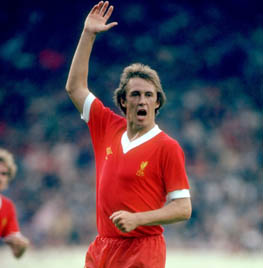
Alan Hansen (Liverpool and Scotland) * 36 games, 1 goal


Hansen continued his progress in a season that eventually saw him lift a second European Cup. The Scot’s partnership with Phil Thompson was a source of great surety for Liverpool. The club only conceded four goals in their European Cup victory and clean sheets in the home leg against Bayern Munich and against Real Madrid proved crucial.

Friday, 16 March 2012

European "Rangliste" 1980/1 - Full-backs

Antonio Cabrini (Juventus and Italy) *** 28 games, 7 goals

A dynamo down the left touchline for Juventus, Cabrini is not just a workhorse. There are precious few players in any position who possess his quality on the ball, his intelligence of positioning or his anticipation. Only 11 players scored more goals than the left-back in the whole of Serie A.

Maxime Bossis (Nantes and France) ** 37 games, 0 goals

Nobody performed better for Nantes in 1980-1 than Maxime Bossis. The French international was a pillar of strength throughout a campaign that almost saw them hold off the challenge from perennial title winners St Etienne. Few then were surprised to see Onze Mondial in their team of the year.
Manfred Kaltz (Hamburg and West Germany)** 34 games, 7 goals


 The runs of Kaltz down the right flank make him probably the best attacking fullback in Europe. His crossing has pinpoint accuracy and he is not afraid to take on a shot himself.  If he has a fault, it is that his defending is not quite as good as his offensive contributions, but regardless there are few better players in his position.
Mick Mills (Ipswich Town and England) ** 33 games, 0 goals

As captain of Ipswich Town, Mills could be hugely proud of a remarkable season. Winners of the UEFA Cup and only narrowly pipped to the league title by Aston Villa, the club had a fantastic year. Mills was a model of consistency for the Tractor Boys and was the pick of many for player of the season.

Jose Camacho (Real Madrid and Spain) * 34 games, 0 goals

Seemingly fully recovered from the knee  injuries which kept him out for so long, Camacho now appears to be back to his best. The left-back enjoyed an excellent season for Real Madrid, despite the club narrowly missing out on both the Spanish league title and the European Cup.
Hugo Hovenkamp (AZ Alkmaar and Holland) * 30 games, 5 goals

A converted left midfielder, Hovenkamp’s best attributes remain going forward.  Vastly experienced, his composed presence in defence was of great importance in helping some of AZ’s younger players through a challenging season.
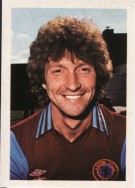
Kenny Swain (Aston Villa and England) * 42 games, 0 goals

Very few neutrals gave Aston Villa much chance of winning the First Division title when the season kicked off. That they did emerge victorious was due to the fact that so many players performed to their very maximum. Swain was no exception, and his crosses from right-back were superb ammunition for Peter Withe and Gary Shaw.
Rafael Gordillo (Real Betis and Spain) * 34 games, 3 goals

Capable of playing as either a left-back or a left sided midfielder, Gordillo is at his best when he is powering down the touchline. The Spaniard’s contract was up at the end of the season and Gordillo naturally attracted interest from larger clubs, that Betis could hold on to their best player was a major coup.
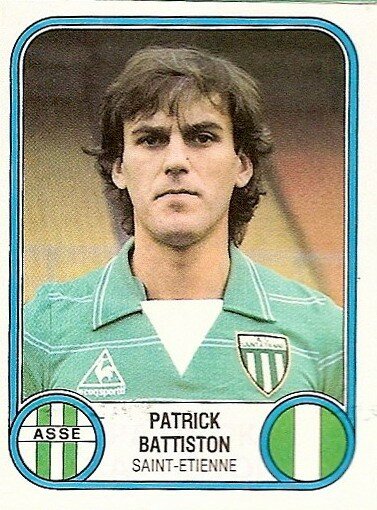
Patrick Battiston (St Etienne and France) * 38 games, 4 goals
Battiston’s first season at St Etienne proved to be an unmitigated success. He played every league game in a season which saw Les Verts win another French title. Already established as a regular for the national side such success will do his long term position in the team no harm.
Wolfgang Dremmler (Bayern Munich and West Germany) * 33 games, 1 goals

Bayern Munich retained their Bundesliga crown with tremendous contributions throughout the squad. Dremmler’s performances were good enough to see him break into the West German national side, making his debut against Brazil in January 1981, no small feat given the strength of the European champions.
Kenny Sansom (Arsenal and England) * 42 games, 3 goals

Having moved from Crystal Palace to Arsenal in the summer, Sansom made an immediate impact in North London. The left-back had proven himself the best in England in his position over recent years, and continued that form for his new club as his peers voted him to their team of the season.
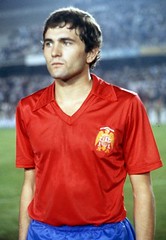
Cundi (Sporting Gijon and Spain) * 33 games, 5 goals

No nation can rival the depth of left-backs available to Spain. With Camacho and Gordillo in competition with Cundi it is questionable whether the Gijon man will add to his international appearances. Despite that he has been one of La Liga’s most consistent fullbacks and was a major force in Sporting Gijon’s creditable seventh place finish.
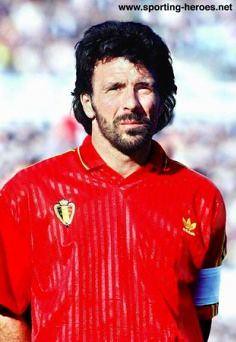
Eric Gerets (Standard Liege and Belgium) * 29 games, 0 goals

Winners in the Belgian Cup final, Standard Lierge owed much to their adventurous right-back Gerets. Never afraid to go forward, he is also very strong defensively and is rarely beaten in the tackle. Enzo Bearzot thought highly enough o f Gerets to place him as one of the top two full-backs in Europe.
Phil Neal (Liverpool and England) * 42 games, 2 goals

The consistency that is a trademark of Neal’s game was again evident in 1980-1. The Liverpool right-back was, yet again, a constant presence in their defence and his assured performances were of tremendous value in capturing a third European Cup victory.

Sunday, 11 March 2012

European "Rangliste" 1980/1 - Goalkeepers

Luis Arconada (Real Sociedad and Spain) *** 34 games, 0 goals


Arconada’s brilliance in goal was a central part of Real Sociedad’s Spanish title success. The Basque club had narrowly missed out the previous season, but were not to be denied a first ever championship in 1980-1. The consistency of Arconada led many to regard him as the world’s best keeper.
Dino Zoff (Juventus and Italy) *** 30 games, 0 goals

Scudetto success for Juventus was again based on their defensive excellence. The Turin giants conceded just 15 goals in the league all season and Zoff was an ever present part of that excellent unit. Even at 39 few can top Zoff’s command of his penalty area.
Harald Schumacher (Koln and West Germany) ** 34 games, 0 goals


Koln might have only managed a midtable finish but there was no better goalkeeper in West Germany than Harald Schumacher. While injury to both Sepp Maier and Norbert Nigbur handed Schumacher his place in the West German national, he has now demonstrated that he is fully deserving of his position between the posts.
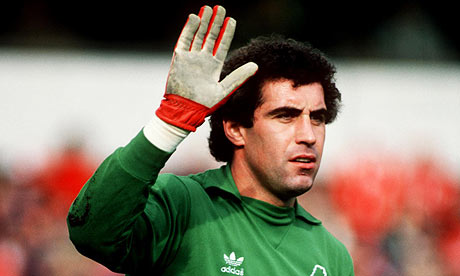
Peter Shilton (Nottingham Forest and England) ** 40 games, 0 goals

While Nottingham Forest couldn’t hold on to their European Cup crown, Shilton was again a model of consistency in goal. Arguably the most well rounded goalkeeper in the game, the England international is apparently without a weakness though he may not pull off quite as many spectacular saves as his rivals.
Manuel Bento (Benfica and Portugal) * 30 games, 0 goals

An excellent season for Bento was well rewarded with another Portuguese league title, the fifth of his career. Benfica were pushed hard all season by Porto, but in the end they held on and won the championship by just two points. Bento remains the first choice keeper for the Portuguese national team with his unrivalled consistency.
Ronnie Hellstroem (Kaiserslautern and Sweden) * 34 games, 0 goals

Veteran keeper Hellstroem played a huge role in Kaiserslautern’s top four finish. Conceding just 37 goals in the season, the Swedish goalie gave Kaiserslautern the best defensive record in the league. Had the club’s attackers matched Hellstroem’s exploits they might have been genuine rivals to Bayern Munich. 
Urruti (Espanyol and Spain) * 31 games, 0 goals

Urruti must curse Luis Arconada. For the rise of Arconada led Real Sociedad to sell Urruti to Espanyol, while he now blocks his path in the national team. Despite that 1980-1 was a fine season for the Espanyol keeper, whose heroics in goal ensured that relegation was never a likely possibility.
Ray Clemence (Liverpool and England) * 41 games, 0 goals

After 14 incredible seasons at Anfield, Clemence moves to Tottenham at the end of the season. During his time in Liverpool the keeper captured almost every trophy available in the game (the only ones missing from his collection are the Cup Winners’ Cup and the Inter-Continental Cup). In winning his third European Cup he characteristically kept a clean sheet in the final victory over Real Madrid.
Rinat Dasaev (Spartak Moscow and Russia) * 34 games, 0 goals in 1980, 34 games 0 goals in 1981

Finishing second in both 1980 and 1981 to Dynamo Kiev, Spartak Moscow demonstrated a remarkable level of  consistency. Indeed it is that attribute which marks out keeper Dasaev, who remains a dominant force in their defence. The Soviet keeper made a rare error in Spartak’s European Cup quarter-final defeat to Real Madrid, allowing Isidro to put the Spaniards 2-0 up, but two late saves were evidence of his rare brilliance. 
Jean Castaneda (St Etienne and France) * 35 games, 0 goals


Succeeding Ivan Curkovic was no easy task for the young Frenchman. The Yugoslav keeper had been a legend at St Etienne and had throughout the 1970s been one of the best keepers in the world. Despite the pressure placed on him, Castaneda was more than up to the task as he won a debut Ligue 1 title.
Thomas Ravelli (Osters and Sweden) * 26 games, 0 goals in 1980, 26 games, 0 goals in 1981

Osters won league titles in both 1980 and 1981 and both times had Ravelli to thank for their success. Far from the calming influence that so many of the best keepers provide, Ravelli is a hive of activity, but this proves to be a great strength as he is always prepared for the unexpected and is capable of pulling off the most remarkable saves.

Retro "Rangliste"

Earlier this season I attempted to rank this season’s European based players according to the system devised by German magazine Kicker in the 1950s. The focus of this blog though has so far been primarily historical and so it was inevitable that I would eventually try to recreate the rankings for the past. This then is my attempt to do that.
I’ve chosen 1980 as an arbitrary starting point on the basis that there exists a wealth of information for the period since then. These rankings do not claim to be definitive. It is hard enough to rank and rate players performing currently, let alone those from more than 30 years ago. Despite that there are more than enough sources with which to form an educated opinion on the standard to which players within Europe were operating. The ratings provided by Kicker itself, those of Don Balon, Mundo Deportivo, Guerin Sportivo and others offer a starting point. There are a plethora of domestic awards in addition to those organised by the likes of France Football and Onze Mondial, which add further light. In addition I’m in the fortunate position to own every copy of World Soccer from 1980 onwards which provided its typical encyclopaedic coverage of the international game.
If anyone has additional information or would like to suggest inclusions and exclusions for future periods then please let me know.
For those who missed the original the scope and categories are included below as a refresher.
Scope
These rankings apply to all players based in Europe in a given season. They focus primarily on domestic and European performances, with due consideration given to mid-season internationals, but exclude continental tournaments such as the World Cup, European Championships and Copa America. Consideration is given to the calibre of competition and opposition faced to reflect the difficulty in obtaining high quality performances. Therefore an outstanding performance in the Belgian league, for instance, will count for less than one in the Champions League final.
Players are rewarded for competing to a high standard in multiple competitions and for maintaining consistency throughout the period. Where a player is injured for a period of time in a season it may prevent them demonstrating the necessary consistency to be classified as world or international class.
The rankings consider merely the performances made during the season in question. They do not look at the ability or past history of a player, only how they have played during the year studied. They do not assess the completeness or variety of talents a player demonstrates either, merely the level to which he influences the games played in.
Note in any given season there may be no players performing to a world class level in a particular position, players do not become world class by default but by the performances they make.
Ratings
World Class *** – Performing consistently to an exceptional standard. Among the finest players in the world and performing at a level comparable with the very best in your position. (Guideline – 15-20 players a season)
International class ** – Performing consistently to an excellent or sporadically to an exceptional standard.  (Guideline – a further 20-30 players a season)
National class * – Performing consistently to a very high standard or sporadically to an exceptional or excellent standard.  (Guideline – a further 50-60 players a season)

Note: All appearance and goal statistics throughout the rankings refer only to the domestic league.